
Club Berghain Berlin: the complete guide to experiencing the underground
of reading - words
You arrive at Am Wriezener Bahnhof on a Saturday evening. It's 2 a.m. No neon lights, no illuminated signs. Just a big gray building jutting out into the night, the bass vibrating the cold asphalt, and a tail snaking through the darkness. Nobody speaks loudly. Everyone knows where he's going. You are in front of the Berghain club, the most legendary place on the world techno scene, and you have not experienced anything yet.
Address: Am Wriezener Bahnhof, 10243 Berlin (Friedrichshain)
Hours: Friday 10 p.m. - Monday 6 a.m. (continuous opening on weekends)
Entrance: ~15-25 EUR (cash only inside)
Photo: Strictly prohibited - sticker on your camera at the entrance
Sound: Funktion-One (one of the best sound systems in the world)
Rule: Dark outfit, authenticity, know the lineup
Berghain, what exactly is it?
The Berghain club is three things at once: a temple of dark techno, a safe and inclusive space for the LGBTQIA+ community, and a Berlin cultural monument recognized as a Clubkultur heritage. Inaugurated in 2004 in a former coal-fired power station, it has been co-directed by Michael Teufele and Norbert Thormann since the beginning.
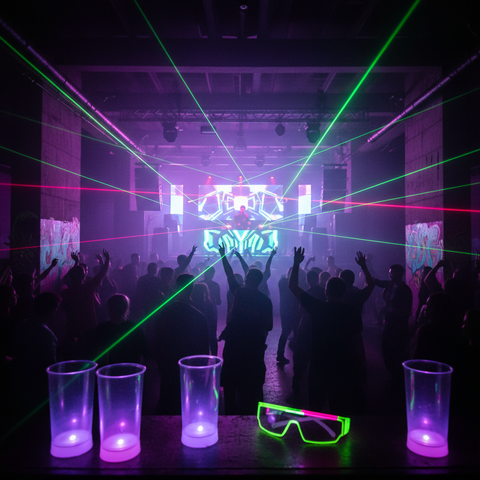
The ceilings rise to 18 meters. Funktion-One sound, one of the best sound systems in the world, pierces you physically. There is almost no light, the spaces are labyrinthine, and the dance floor has no official end. The atmosphere is libertarian, non-voyeuristic, deeply respectful despite - or thanks to - its reputation.
And the name? “Berghain” merges two Berlin districts: “Berg”, as Prenzlauer Berg, the district of the founders, and “Hain”, from Friedrichshain, the club district. A name that encodes the history of the place in every syllable.
Berhain in the history of Berlin techno
From Ostgut to Berghain (1998-2004)
The story begins in 1998. Ostgut opened in a warehouse in Friedrichshain and quickly became a cult space for Berlin's gay community and underground techno fans. No tourists, no stares. Just brutal music and rare freedom.
The Ostgut closed in 2003 when real estate developers took over the building. Teufele and Thormann are not giving up. In 2004, they invested in the former Am Wriezener Bahnhof thermal power station - a monumental building, raw concrete, bricked-up windows. Berghain is born, with the DNA of Ostgut and exceptional acoustics.
The former Friedrichshain power station
The building is a beast in its own right. Built in the 1950s under the GDR to supply the city with electricity, it was abandoned after reunification. Its industrial structure - two main rooms, passageways, intermediate spaces - creates a unique topography in the world of clubs. Impossible to reproduce, impossible to imitate. When you enter it for the first time, you understand why the whole world is talking about it.
How to enter Berghain
The unwritten dress code
There is no official list. This is what makes entry both fascinating and frustrating. The general rule: dark, underground, authentic. Harnesses, dark looks, leather, light fetish outfits are welcome. Evening dresses, designer jeans and suits are prohibitive.
If you're looking for an outfit that speaks this language, take a look at our Berghain outfits or our underground festival bodies. Not to “get through the door for sure” – that doesn’t exist – but to arrive with a visual identity consistent with the spirit of the place.
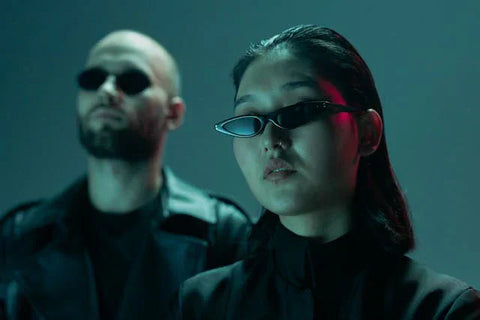
rave glasses and dark pieces complete a Berghain look without overwhelming it. Authenticity always takes precedence over visible effort.
Sven Marquardt and the art of selection
Sven Marquardt is not a bouncer. He is a renowned photographer, an artist, a figure of Berlin underground culture, covered in tattoos and piercings. His selection at the Berghain gate has become legendary not becauseit is arbitrary, but because it is instinctive.
It reads energy. Are you there to experience something, or just to say that you've been there? The difference is visible at 10 meters. He is incorruptible, inaccessible to petitions and arguments. If you are turned away, you leave without a word. That's the rule.
The best strategies for the queue
A few ideas - without a magic recipe, because there is none:
Come alone or in pairs, three maximum. Large groups are systematically turned away. Know the lineup for the evening before you arrive. Knowing who's playing and what time is a strong signal that you're there for the music. Speak English or a few words of German near the bouncers, avoid making French conversations too loud. Come on Monday morning: the queue is shorter, the atmosphere more intimate, and the closing sets are often the most intense. And above all: keep your calm, your neutrality, your confidence. Don't beg. Don't act like it.
Even regulars get turned away. It’s in the order of things.
Panorama Bar vs Berghain: two distinct experiences
Berghain is actually several clubs in one building.
Le Berghain (ground floor and mezzanine): dark techno, brutal kicks, dark and masculine atmosphere, almost no light. This is where the big names in industrial techno play.
The Panorama Bar (2nd floor): melodic house and techno, windows that let in daylight at the end of the night, a more mixed and bright atmosphere. Sunday morning at the Panorama Bar with the rays of sun shining through is an experience in its own right.
La Kantine am Berghain: adjacent room, accessible without going through the main screening, with its own programming. A good plan if you want to experience the atmosphere of the place without trying your luck at the front door.
The resident DJs who made the legend
Berghain is not just about architecture or a door. It is also a program of residents who have built their musical identity in this specific place.
| DJ | Style | Typical niche |
|---|---|---|
| Ben Klock | Dark techno minimal | Peak time Berghain (3h-8h) |
| Marcel Dettmann | Industrial technology | Closing set Berghain |
| Tama Sumo | Deep house / melodic techno | Panorama Bar night |
| Norman Nodge | Dense industrial technology | Berghain after midnight |
| Steffi | House, melodic techno | Panorama Weekend Bar |
| Blawan | Brutal industrial rave | Experimental Berghain Sets |
| Paula Temple | Techno noise | Berhain Experimental Sets |
These artists don't play hour-long sets. A closing at Berghain takes 4 to 6 hours. Ben Klock held the track from Saturday morning until Monday noon. It is this type of musical endurance that has forged the reputation of the place.
When to go to Berghain?
The short answer: not Saturday evening at 10 p.m. This is the busiest slot, the longest queue, and the lowest ratio of successful entries.
Slots that work:
Saturday 3 a.m.-4 a.m.: sets are at peak, the queue is stabilizing. People who just wanted to “see” went home.
Sunday evening / Monday morning: the most legendary moment. The “Morning of” is a culture specific to Berghain. Daylight at the Panorama Bar, the last sets stretching out, an intimate and exhausted atmosphere. This is where the real Berghain lives for those who know it.
Friday evening: often only the Panorama Bar is open. Less filtering, more accessible atmosphere. A good plan for the first time.
The entry ticket is valid for the whole weekend if you don't go out. Some do it from Friday evening to Sunday evening without interruption. It's possible. This is Berlin.
Prepare your outfit for Berlin
The Berghain style is not a costume. It’s consistency. The place rewards people who know who they are and who assume it, not those who bought the right reference on the internet the day before.
A few basics: dominant black, textured materials (leather, fishnet, mesh), pieces that show that you are not afraid of taking up space on a dancefloor. Harnesses are a central piece of the Berghain aesthetic - whether for men or women, they signal affiliation with underground club culture.
To build your look:
- Our Berghain outfits: dark pieces designed for the dancefloor, from bodysuits to complete combos
- Our underground bodies: for minimal and authentic looks
- The festival accessories and the women's harnesses to complete without overloading
The objective is not to enter. The goal is to spend a night that belongs to you, in a place that belongs to everyone - as long as you deserve it.